Key takeaways
- The Anand Karaj, meaning act towards a blissful union, is the heart of a Sikh wedding, performed before the Guru Granth Sahib.
- Its core is the four laavan, hymns by Guru Ram Das, during which the couple circle the holy scripture.
- Ceremonies are usually held in the morning, before noon, in the gurdwara.
- Respectful, unobtrusive coverage and knowing the timings are everything.
Sikh wedding photography centres on the Anand Karaj, the sacred marriage ceremony performed in the gurdwara before the Guru Granth Sahib. Capturing it well takes respect, an understanding of the rituals, and the experience to anticipate moments like the four laavan without ever intruding. Here is a guide to the key moments and how we photograph them.
What is the Anand Karaj?
The Anand Karaj is the Sikh marriage ceremony, a name that translates as act towards a blissful or happy union. As Wikipedia notes, it was introduced by Guru Amar Das, and the four laavan, the hymns at its heart, were composed by his successor Guru Ram Das. The ceremony is performed in a gurdwara in the presence of the Guru Granth Sahib, the Sikh holy scripture regarded as the eternal living Guru.
With 524,000 Sikhs recorded in England and Wales at the 2021 Census, the Anand Karaj is one of the most photographed religious ceremonies in British wedding photography, and one of the most meaningful to get right.
When and where it takes place
The Anand Karaj is traditionally held in the morning, before noon. The ceremony is sung in Raag Suhi, whose time falls in the third pehar of the day, roughly 9am to 12pm, which is considered the auspicious, tranquil window for new beginnings, as SikhNet explains. For photographers this means early starts and careful planning around the light inside the gurdwara.
The milni and the morning
The day often begins with the milni, the meeting of the two families outside the gurdwara, with garlands, embraces and tea. It is warm, informal and full of natural moments, a lovely contrast to the stillness of the ceremony that follows. We cover it unobtrusively, reading the families and staying out of the way.
The four laavan: the heart of the ceremony
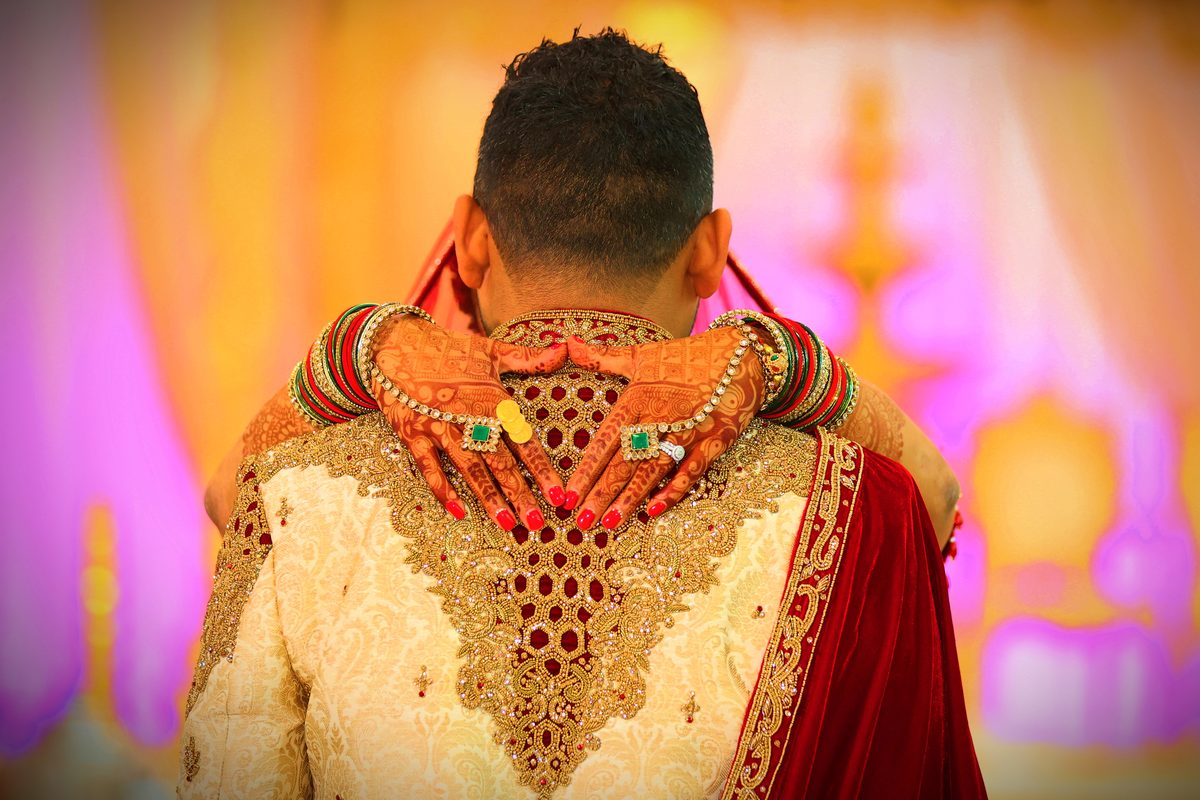
The core of the Anand Karaj is the four laavan, four hymns composed by Guru Ram Das, each describing a stage of spiritual union. As each laav is sung and then read, the couple rise and walk slowly around the Guru Granth Sahib. Photographing this means knowing the choreography in advance, the couple circling, the scarf joining them, the musicians, so the camera is positioned for moments that happen only four times and never again.
Respectful coverage inside the gurdwara
Photographing inside a gurdwara comes with responsibilities: heads are covered, shoes removed, and we never stand above the level of the Guru Granth Sahib or position ourselves disrespectfully. We work quietly, often with longer lenses and available light, to capture the ceremony without disturbing it.
In our experience, the families who feel most at ease are those whose photographer clearly understands and honours these customs. It is a privilege to document the Anand Karaj, and we treat it accordingly.
Every Sikh family keeps the day a little differently, and we photograph yours with the respect the Anand Karaj deserves. Tell us about your ceremony and gurdwara and we will plan coverage around its timings.
Related: Asian wedding photography, Hindu wedding photography guide, our gallery, check your date.